Locate dependable San Carlos remodeling specialists by confirming an active CSLB license, clean disciplinary record, and bond; require general liability and workers' comp certificates naming you as additional insured. Make certain they pull San Carlos/San Mateo permits and pass inspections. Require scope‑tied, line‑item estimates, locked contracts, and written change‑order controls. Check recent references and inspection histories. Insist on realistic schedules, coordinated trades, approved specs, photo‑documented quality control, and written warranties. You should also seek proven budgeting, allowances, and contingency practices-more details below.
Main Points
- Confirm current CSLB license, bond, and insurance; obtain certificates naming you as additional insured and verify on the CSLB site.
- Demand in-depth, scope-tied, line-item estimates that include brands, drawings, code references, and clear inclusions/exclusions in advance of contracting.
- Secure a written contract with payment by percent complete, lien releases, warranties, and pre-approved change-order procedures with capped markups.
- Call for realistic timeframes covering permits, inspections, trade sequencing, and long-lead materials; order windows, cabinets, and fixtures early.
- Establish onsite QA via checklists, photo documentation, inspection reports, punch lists, and completed permit closeout prior to the final payment.
What Defines a Remodeling Contractor Genuinely Dependable in San Carlos
Prior to signing any contract, verify that a San Carlos remodeler is licensed, insured, and well-versed in local codes and permitting. You also need disciplined project management, clear scopes, and itemized bids that align with plans and specifications. Expect clear schedules, documented change-order procedures, and measurable milestones. Review neighborhood reputation through up-to-date, nearby references and site visits to completed projects. Evaluate craftsmanship details: waterproofing methods, fastening schedules, ventilation strategies, and compliant electrical and plumbing practices. Validate supplier relationships for lead-time reliability and consistent material standards. Demand written warranty terms that outline coverage periods, exclusions, and remedies, and verify service response commitments. Evaluate communication: single point of contact, weekly updates, and punch-list tracking. Lastly, confirm safety protocols, dust control, and documented closeout packages.
Licensing, Insurance, and Local Permits You Must Review
Before you sign, confirm the contractor's active CSLB license and review any complaints or disciplinary actions. Confirm they carry current general liability and workers' comp insurance, and request certificates naming you as additionally insured. Make certain they'll obtain required San Carlos and San Mateo County permits, adhere to inspection schedules, and provide final approvals in writing.
Verification of Contractor Licenses
Even though a contractor's portfolio may appear impressive, you ought to verify their credentials to safeguard your project and comply with San Carlos and California law. Begin with a CSLB license lookup to verify the company name, license number, classification (e.g., B-General Building), status, and issue/expiration dates. Make sure the qualifier matches who will supervise the job. Examine any disciplinary actions or citations.
Complete bond confirmation to verify the active contractor's bond fulfills California's current minimum and that the bonding company is admitted. Check the bond has not lapsed or been canceled. Ensure workers listed are associated with the license.
Ask for written documentation: license card/number, qualifier ID, and bond certificate. Cross-check everything against CSLB records, and save dated screenshots or PDFs for your documentation. If data don't match, select another contractor.
Insurance and Permit Compliance
Despite having a valid CSLB license, you need to validate insurance and permit compliance to protect your property and comply with San Carlos and California regulations. Require written proof of active general liability and workers' compensation, with limits matching project scope. Verify carriers, effective dates, and endorsements; obtain certificates naming you as an additional insured and waivers of subrogation. Inquire about policy audits that could expose you to back-billing or lapses.
For permits, confirm the contractor pulls City of San Carlos plumbing, electrical, building, or mechanical permits as applicable and books inspections at each milestone. Assure plans incorporate Title 24 energy and CALGreen provisions. Review contract language on claims handling, indemnification, and stop-work procedures. Keep records of permits, inspection clearances, certificates, and insurance documents.
Examining Work Samples, Recommendations, and Reviews With Confidence
While choosing San Carlos remodeling experts, evaluate portfolios, references, and reviews with a systematic, consistent methodology. Start by scanning project scopes that resemble yours and authenticating trade categories. Evaluate before and after photos for construction quality, alignment, finish consistency, and code‑appropriate materials. Check for dated entries that show recent, local work.
Ask for three current references. Ask about schedule compliance, cleanliness, punchlist resolution, and communication. Confirm that the project completed inspections without repeat corrections. If available, assess client video testimonials to evaluate authenticity and detail.
Review external reviews across multiple platforms. Focus on patterns over outliers, and note how contractors handle to issues. Verify licensing names match review profiles. Examine timelines, budgets, and crew professionalism. Document results, rank vendors against your criteria, and move forward to interviews.
Open Estimates, Agreements, and Change-Order Controls
Open powerfully by insisting on a scope‑tied, line‑item estimate that itemizes labor, materials (featuring designated brands/grades), permits, inspections, disposal, overhead, and profit. Demand detailed estimates that incorporate drawings, project specifications, and code sections, so quantities and assemblies are clearly documented. Mandate fully disclosed invoicing with receipts for substantial materials and timecards for labor classifications.
Lock pricing and scope in a written contract: include disbursement schedule by percent complete, lien releases, warranty terms, insurance limits, and a clear allowance policy. Establish change‑order tracking with pre‑approval: written description, cost impact, schedule impact, and signatures before work begins. Authorize unit prices for predictable extras. Conduct periodic contractor audits-compare bids, invoices, and field quantities-to validate costs. Reserve a contingency and cap markups on changes.
Project Oversight: Schedules, Key Deliverables, and Correspondence
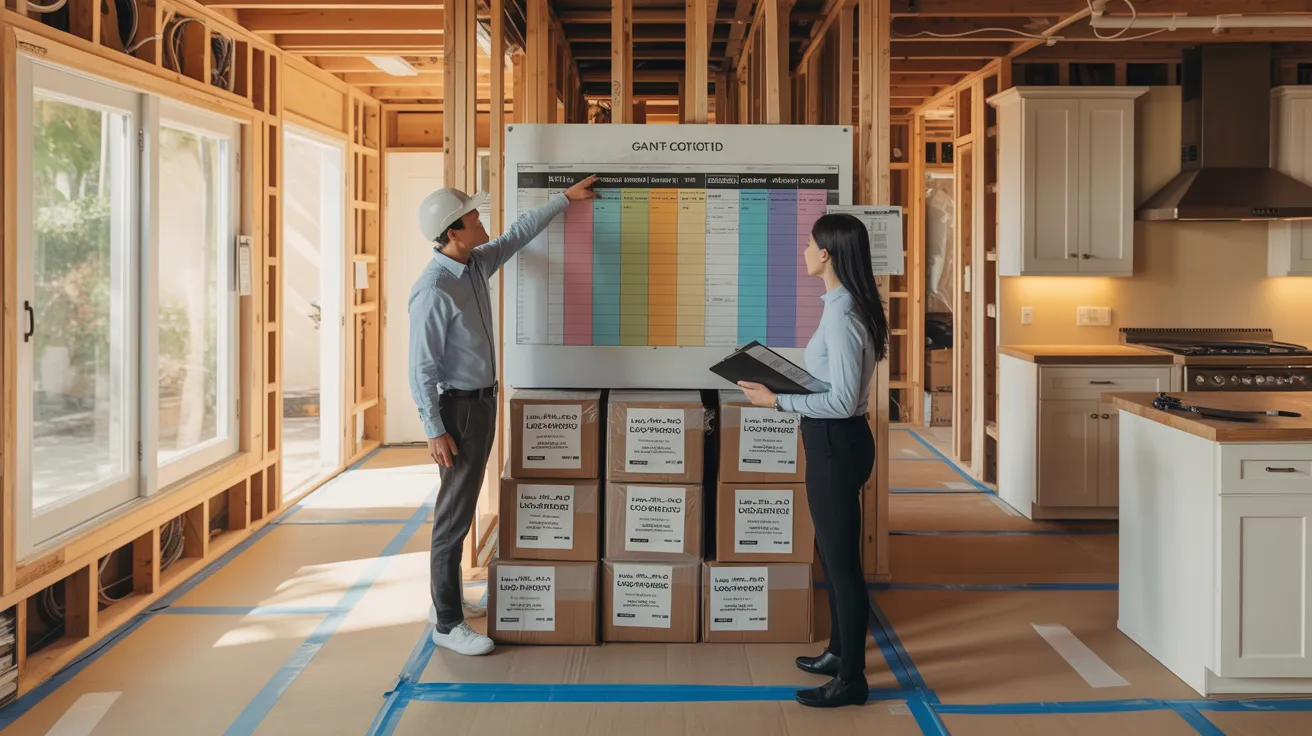
You get a clear project timeline with start, inspection, and substantial‑completion dates. We create measurable milestones and track dependencies so you know what follows and who's accountable. You receive brief updates at predetermined intervals and after any critical path change, ensuring on-schedule decisions.
Clear Initiative Deadlines
Well-defined project timelines keep your remodel on schedule, your budget under control, and every trade aligned. You must have realistic schedules that factor in permitting lead times, inspections, material procurement, and trade availability. We structure work in logical, code-compliant phases, using phased sequencing to prevent conflicts–demo before structural, rough-ins before insulation, finishes only after verified dry-in. This structure reduces rework, safeguards critical paths, and reduces downtime.
We establish task durations using crew productivity rates and supplier confirmations, then lock start/finish windows that match local San Carlos inspection cycles. Dependencies are clearly defined: electrical rough proceeds after framing approval; drywall starts after mechanical pressure tests pass. You'll observe more info float, risk buffers, and weather contingencies where applicable. With a transparent calendar and well-defined dependencies, you can plan with confidence and avoid costly surprises.
Milestones and Recent Updates
With timelines in place, milestones anchor progress and updates maintain team alignment. You'll find each phase outlined with measurable deliverables: permits obtained, rough-ins inspected, finishes completed, punch-list closed. We utilize progress tracking dashboards to log inspections, materials arrival, and crew allocations, so you remain informed about what's finished and what's upcoming.
We organize check-ins every week and provide quarterly reports covering risk mitigation, scope, and budget variances. You will receive photo documentation, inspection results, and status of change orders. In the event that a milestone shifts, we modify the critical path and notify relevant stakeholders immediately.
We also build community engagement into the plan, including neighbor notices before noisy work, clear parking protocols, and site safety briefings. Following major completions, we host streamlined celebration events, reinforcing accountability while recognizing your project's tangible achievements.
Organizing Trade Services, Obtaining Materials, and Quality Assurance
From initial planning to final punch list, seamless remodeling copyrights on tight trade coordination, strategic material sourcing, and strict quality assurance. You align trade scheduling so demolition, framing, mechanical-electrical-plumbing rough-ins, insulation, and finishes progress without conflicts. You confirm permit conditions and inspections, then lock dates with subs, establishing scopes, submittals, and site access rules. You control material logistics by approving specifications, confirming lead times, and scheduling deliveries to eliminate damage and delays. Long lead-time items, such as windows, custom cabinets, fixtures are ordered early with alternates vetted.
At the job site, you maintain safety, code compliance, and manufacturer installation standards. You use checklists for in-wall, pre-close, and final QA, capturing with photos. Issue logs are tracked to closure before payment. The result: reliable workflow, controlled budgets, and lasting, warrantable outcomes.
Smart Budgeting: Cost Drivers, Allowances, and Contingency Planning
Although every remodel is different, smart budgeting employs the same discipline: recognize cost drivers early, set realistic allowances, and establish a contingency that aligns with project risk. Start by mapping scope to code requirements, structural conditions, utilities, and finishes-your primary cost drivers in San Carlos. Demand written bids with clearly defined inclusions and exclusions. Implement allowance strategies that represent market pricing: detail brands, model numbers, install methods, and square footages to stop scope creep. Divide owner-selected finishes from trade labor.
Evaluate risks ahead of demolition. For contingency sizing, allocate 5% to 10% for thoroughly documented, non-structural work; ten to twenty percent for older properties, structural modifications, or utility relocations. Track actuals weekly against your baseline. Issue change orders for scope changes only. Finalize long-lead items early to stabilize pricing. Document inspections and close permits promptly to avoid rework.
Commonly Asked Questions
How Do Remodelers Address Eco-Friendly Materials and Energy Efficiency Upgrades?
You specify goals, and remodelers select certified low‑VOC finishes, sustainably sourced timber, and recycled cabinetry. They validate insulation R-values, improve air sealing, and right-size HVAC. Electricians implement solar ready wiring, dedicated EV circuits, and high‑efficiency lighting to code. Plumbers fit WaterSense fixtures and recirculation loops. Crews handle waste diversion, repurpose materials, and document product EPDs. They commission systems, pull permits, and coordinate energy modeling to increase rebates and meet local green codes.
What Accessibility Modifications Can Be Incorporated for Aging in Place?
You can incorporate zero entry thresholds, wider doorways, lever handles, and non-slip flooring for improved mobility. Add grab bars anchored to blocking, comfort-height toilets, curb-free showers with benches, and adjustable handheld sprayers. Include task lighting, contrasting edges, and low-pile modifications. Use voice activated fixtures and smart controls for lights, blinds, and HVAC. Decrease countertops, raise outlets, and guarantee clear turning radii. Validate ADA principles, local codes, proper egress, and load-bearing requirements.
Do You Offer Design-Build Services or Work With External Designers?
Yes-you may opt for in-house design services or full designer cooperation. You won't lose creative control; you'll gain a streamlined, code-compliant process. We organize architectural services, engineering, permits, and construction under one unified contract, or integrate effortlessly with your preferred design professional. You'll approve detailed scopes, schedules, and budgets upfront, then track milestones through one point of contact. Either way, you get accountable project management, value engineering, and clear documentation from concept to final inspection.
How Is Noise, Dust, and Neighbor Communication Handled During Construction?
You get a clear plan: we control dust with zip walls, negative air machines, and HEPA air scrubbers; we limit noise by scheduling loud work within allowable hours and using quieter tools when feasible. We protect pathways, seal vents, and clean daily. You receive daily updates on progress and upcoming disruptions. We post notices, notify immediate neighbors before major milestones, and provide contact details for concerns. All practices comply with local codes and HOA requirements.
What Warranties and Ongoing Maintenance Support Do You Provide?
You receive a written Labor warranty which covers workmanship for a set term, plus manufacturer warranties for installed and integrated products. We outline claim procedures, response times, and exclusions in your closeout packet. You also get as-builts, finish schedules, and care guides. Optional Maintenance plans include regular inspections, seasonal adjustments, caulking, grout sealing, and minor tune-ups to preserve performance and code compliance. We deliver a single point of contact and prioritized dispatch for any post-project issues.
Conclusion
Once you bring in reputable San Carlos remodeling experts, you aren't simply executing an agreement-you're setting a blueprint in motion. Envision dust sheets cleared, sunlight dancing across fresh tile, and punch lists dwindling to nothing. You've checked licenses, vetted portfolios, locked estimates, and prepared contingencies. Now timelines sync up, trades collaborate seamlessly, and updates reach you before you request them. With explicit scopes and tight change‑order controls, your budget holds firm. Enter through the threshold: it's your vision, delivered cleanly, compliantly, and exactly as promised.